By: Jessica Rusconi
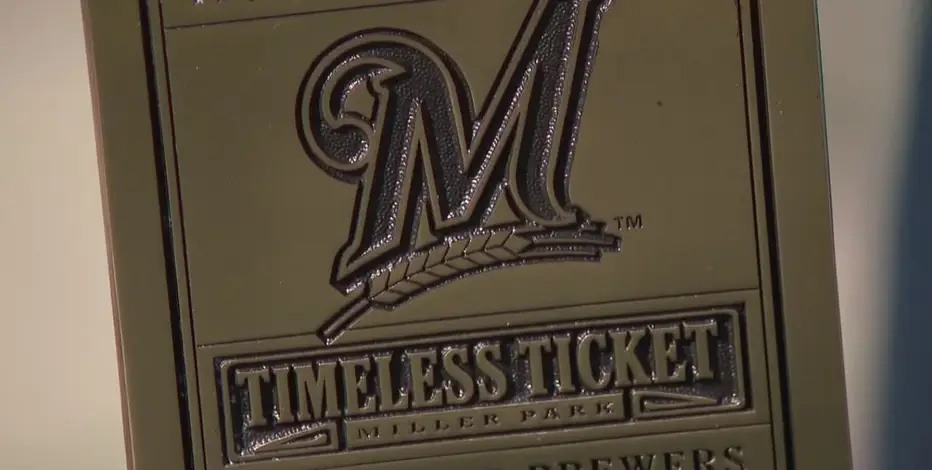
In 2015, the Milwaukee Brewers crafted a promotional campaign involving the “Timeless Ticket.” The team offered 1,000 brass Timeless Tickets for $1,000 each, giving ticket holders the ability to redeem their ticket “to any future home game . . . [w]hether it’s this season, the year 2050, or the 7th game of the World Series, all are valid games to redeem a Timeless Ticket.”[1] One Timeless Ticket holder shared that the listed terms stated the ticket “may be redeemed for the best available seat location(s)” and “are subject to ticket availability at the time of redemption.”[2]
Timeless Ticket holders sought to redeem their tickets in the Brewers’ first World Series appearance in 44 years. However, only 400-level terrace seats or standing room only were available, while better seats later became available to the general public.[3] The club released a statement apologizing for how it handled the promotion. The statement added that all fans who submitted requests to redeem their tickets before the deadline could keep their World Series ticket and retain their Timeless Ticket for another game of their choosing in the future.[4]
While many ticket holders were satisfied with the club’s response, others doubted that the Brewers upheld their end of the deal. Ticket holders paid $1,000 for a defined benefit: the best available seat, subject to availability, at any home game.[5] But could the Brewers’ failure to provide the promised “best available seat” constitute a breach of contract? How much can the qualification/condition of “subject to ticket availability” limit the express benefit?
Assuming here, for simplicity, that a court were to find this contract ambiguous, it could look to extrinsic evidence to determine the parties’ intent.[6] Based on the language on the team’s website, the contract language retained by ticket holders, and the high price of the 2015 Timeless Tickets, it appears that the parties intended this to be of significant value. Based on these considerations, it is hard to believe the court would find that “best” included 400-level seats and standing room only.[7]
The duty of good faith and fair dealing is implied in every contract.[8] The team’s apology[9] could potentially undercut claims of bad faith and unfair dealing, but the fact that tickets for better seats later became available to the public suggests otherwise. However, a party may breach a contract as long it is willing to pay damages so the injured party is entitled to the benefit of the agreement.[10] In fact, it is sometimes the best business decision to do so, called an “efficient breach.” An efficient breach occurs when a party breaches a contract because doing so creates a greater economic benefit than performance would, provided the breaching party compensates the other party for its losses so that no one is worse off.[11] Perhaps the Brewers hoped to capitalize on ticket sales in the most expensive World Series to date, or perhaps this was a genuine communication error. It is possible that the Brewers made such calculation, given that the get-in price for Game 1 in Milwaukee was $2,635.[12] Although a breach would be damaging from a public relations perspective, it may be legally defensible if Timeless Ticketholders were put in the position they would have been in had the contract been satisfied.
Consumer protection law also could be implicated through Wisconsin’s Deceptive Trade Practices Act.[13] While Timeless Ticket holders could argue that the representation was misleading, the Brewers might counter that “best” seat is subjective promotional language and is therefore nonactionable puffery.[14] However, unlike marketing claims about products like appliances, seats at an athletic event can easily be compared with other available seats.
The Timeless Ticket controversy raises a question for all involved in the sports and entertainment industry: how did such a promotion reach the market without clearer terms? While it remains unclear whether the Brewers will face any litigation because of the controversy, it provides a lesson for sports and entertainment organizations moving forward. Teams should clearly define redemption priority, availability, and other limitations in promotions. The Timeless Ticket controversy underscores the importance of legal oversight across departments to identify and avoid legal risks. As the Brewers demonstrate, legal risks can persist long after the promotion, even more than a decade later.
[1] Brewers Timeless Ticket, MLB, https://www.mlb.com/ [https://perma.cc/7KZV-6SGK].
[2] Kelli Arseneau, What are Timeless Tickets, and what caused the World Series controversy?, Milwaukee J. Sentinel (Oct. 23, 2026, at 17:32 CT), https://www.jsonline.com/ [https://perma.cc/Z53Q-LHXS].
[3] Id.
[4] Justin Birnbaum & Jacob Feldman, Milwaukee Brewers Apologize For Timeless Ticket Missteps, Sportico (Oct. 20, 2026, at 17:21 MST), https://www.sportico.com/ [https://perma.cc/56AE-GS48].
[5] Arseneau, supra note 2.
[6] Town Bank v. City Real Estate Dev., LLC, 2010 WI 134, ¶ 33, 330 Wis. 2d 340, 793 N.W.2d 476.
[7] Wisconsin courts reject any construction that results in an unreasonable result. Borchardt v. Wilk, 156 Wis. 2d 420, 428, 456 N.W.2d 653, 657 (Wis. Ct. App. 1990).
[8] Wisconsin Natural Gas v. Gabe’s Constr. Co., 220 Wis. 2d 14, 21, 582 N.W.2d 118, 121 (Wis. Ct. App. 1998)(citation omitted).
[9] See Birnbaum & Feldman, supra note 4.
[10] See Mayberry v. Volkswagen of Am., Inc., 2005 WI 13, ¶ 55, 278 Wis. 2d 39, 692 N.W.2d 226 (Wilcox, J., concurring).
[11] Gil Lahav, A Principle of Justified Promise-Breaking and Its Application to Contract Law, 57 N.Y.U. Ann. Surv. Am. L. 163, 163 (2000).
[12] Paul Kasabian, Brewers vs. Rays 2026 World Series Game 1 Makes MLB History with Record Ticket Prices, Bleacher Report MLB(Oct. 23, 2026), https://bleacherreport.com/ [https://perma.cc/PT49-PAA6].
[13] Wis. Stat. § 100.18 (2017). Wisconsin’s Deceptive Trade Practices Act prohibits persons or businesses, acting with the intent to sell or distribute goods or services or induce the public to enter into a related contract, from making public advertisements or other representations containing any untrue, deceptive, or misleading assertions.
[14] State v. American TV & Appliance, Inc., 146 Wis. 2d 292, 301, 430 N.W.2d 709, 712 (1988) (finding a retailer’s advertisement using the words “best” and “finest” to describe certain brands of washers and dryers was puffery and did not constitute facts that could be proven false).