By: Sofia Gonzalez
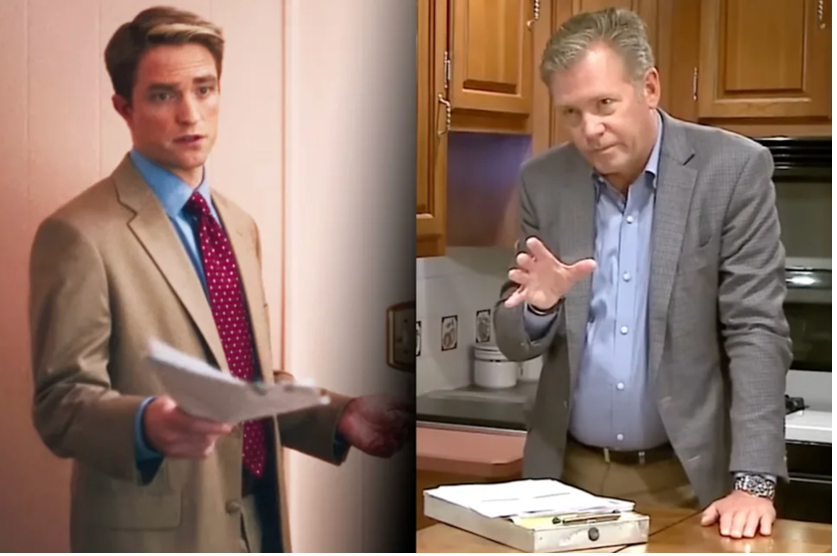
With biopics such as “Michael” and “Springsteen” gracing screens, it is worth noting how the behind-the-scenes dynamics play out regarding artists’ creativity and how publicity rights influence their portrayals. Recently, Chris Hansen, the host of the television show “To Catch a Predator,” was interviewed regarding Robert Pattinson’s new role in his upcoming movie “Primetime”. The film’s distributor, A24, has marketed it as “inspired by true events.”[1] A24 invited Hansen to see a screening of the film on the condition that he sign an NDA, which he refused to sign and ultimately did not watch.[2] Hansen stated the NDA was “overly restrictive”[3] and claimed, “A24 wanted me to sign away my rights to my name, image and brand essentially, as well as any potential legal rights that would come out of the movie.”[4] Hansen has considered taking legal action,[5] and feels more upset that A24 wanted him to be satisfied with the film but didn’t tell him when shooting started.[6] This raises the question: Does the unauthorized use of a person’s image or identity violate their publicity rights, or does the First Amendment provide protection? If the unauthorized use does violate their publicity rights, can Hansen take legal action if A24 hasn’t directly said the film is about his life but is profiting off his identity?
For a clearer understanding of this issue, it helps to look at a couple of cases that have addressed it. Bette Midler sued Ford Motor Company, claiming Ford used her distinct voice for its own profit after she explicitly denied participating in their commercial, and Ford then found a sound-alike to sing to give the impression Midler was singing.[7] The Ninth Circuit held for Midler, reasoning that California can find an injury when one’s distinctive, widely known voice is being appropriated for profit.[8] The question is whether the line falls at voice alone or extends to every attribute by which an entertainer can be recognized. In Hansen’s case, perhaps we can evaluate whether Pattinson’s impression or use of Hansen’s famous line “Have a seat right over there,” appropriates Hansen’s television persona. In Midler’s case, Ford wanted to give the impression of Midler’s voice. However, Midler involved a commercial advertisement, and the Ninth Circuit’s holding was narrow: it protected a distinctive, widely known voice that was deliberately imitated to sell a product.[9] “Primetime”clearly isn’t trying to trick the audience into thinking Hansen is in the film or selling a product. Hansen’s persona and “To Catch a Predator” show are being used for profit, even if “Primetime” doesn’t directly credit Hansen, because his attributes and his show are being appropriated. But the fact that a film is made for profit does not, on its own, overcome First Amendment protection.
In actress Olivia de Havilland’s suit, the outcome was different. De Havilland sued FX Networks, LLC, over her portrayal by actress Catherine Zeta-Jones on the docudrama show Feud.[10] Although Havilland initially prevailed at the trial court, the California Court of Appeal reversed.[11] The Court of Appeal held that the First Amendment protects FX because film and TV companies are not required to purchase the rights to an entertainer’s name or likeness.[12] The Court explained Feud was protected because the First Amendment protects artists who take the stories of real people and create art from them.[13] The Court also stated that using de Havilland’s name did not violate her right of publicity because using a public figure’s name is supplementary to protecting the original work.[14] The Court’s decision turns on whether the “marketability and economic value” of the work is directly affected by the celebrity being portrayed.[15] In de Havilland’s case, the Court said it was not, because her character was a minor part and the work’s value came from the “creativity, skill and reputation of Feud’s creators and actors.”[16]
Where does this leave entertainers and artists? Not just for Hansen and “Primetime” but for entertainers and the like as a whole? Although the First Amendment does not require film companies to purchase the rights to a person’s name or likeness, and using his name also does not seem to violate Hansen’s right of publicity, what about the “marketability and economic value” issue? In de Havilland’s case, she played only a small part in Feud, but in Hansen’s case, he is the main character in “Primetime.” Profit plays a crucial role in both Midler and de Havilland, so if Hansen were to prevail on this issue, we might also have to weigh the “creativity, skill and reputation” of the actors and creators.
The courts appear to provide broader discretion for creative works when there is no appropriation, but it is important to understand where rights of publicity come into play. Although these two cases provide a useful framework, they do not exhaust it, and the line remains unclear and courts evaluate each case to determine what constitutes “appropriation” of someone’s attributes and whether that likeness is driven by “marketability and economic value.”
[1] Clayton Davis, Chris Hansen Says He Refused to Sign His Rights Away in Order to Screen Robert Pattinson’s ‘Primetime’, Variety (Aug. 20, 2026, at 18:43 PT), https://variety.com/ [https://perma.cc/NN9T-GJNQ].
[2] Id.
[3] Teddy Grant, Chris Hansen weighs lawsuit over ‘sneaky and disingenuous’ Robert Pattinson’s ‘Primetime’, NewsNation (Aug. 29, 2026, at 09:11 CDT), https://www.newsnationnow.com/ [https://perma.cc/G888-CK8D].
[4] Davis, supra note 1.
[5] Grant, supra note 2.
[6] Davis, supra note 1.
[7] Midler v. Ford Motor Co., 849 F.2d 460, 461 (9th Cir. 1988).
[8] Id. at 463-64.
[9] Id.
[10] De Havilland v. FX Networks, LLC, 21 Cal. App. 5th 845, 850-51 (2018).
[11] Id at. 850.
[12] Id. at 859, 861.
[13] Id. at 860-61.
[14] Id. at 861-62.
[15] Id. at 863.
[16] De Havilland, 21 Cal. App. 5th at 864.