By: Daniela Mateu
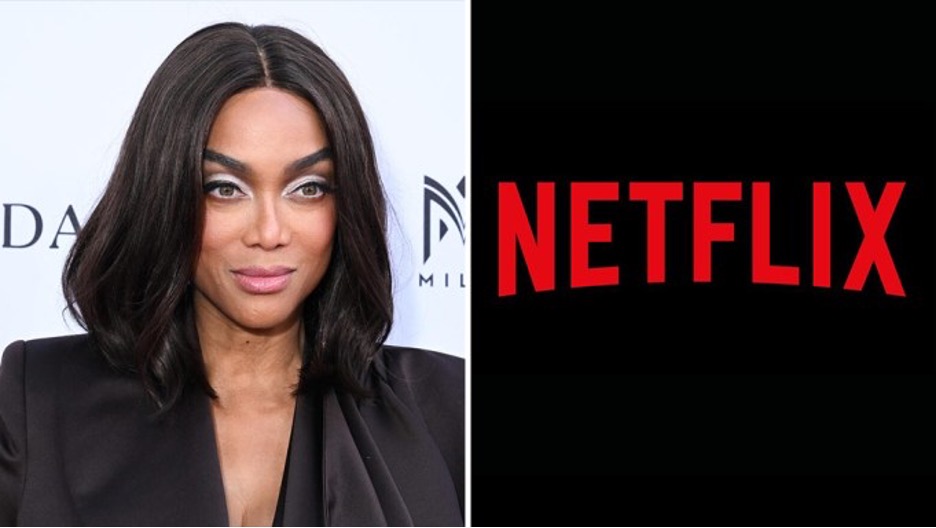
For more than a decade, Tyra Banks helped shape one of reality television’s most recognizable modeling competitions through America’s Next Top Model (“ANTM”). Banks created the series, served as an executive producer, and hosted all but one of its twenty-four cycles.[1] Now, she is challenging what happened when the editorial lens turned on her. In June, Banks sued Netflix and the creators of Reality Check: Inside America’s Next Top Model, alleging that the three-part documentary used selective editing and omissions to create a false and defamatory portrayal of her.[2] Banks says she sat for a roughly three-and-a-half-hour interview, but only about sixteen minutes appeared in the final series.[3]
One of Banks’s central allegations concerns former ANTM contestant Shandi Sullivan. In Reality Check, Sullivan recounts a sexual encounter that occurred while filming the show’s second cycle.[4] Sullivan has described the encounter as a sexual assault.[5] She says she was heavily intoxicated and believes members of the production team should have intervened rather than continuing to film.[6] The documentary later shows Banks responding to whether she remembers “the story with Shandi.” According to Banks, the finished episode shows her hesitating before the scene ends, while footage omitted from that sequence shows her affirmatively indicating that she remembered Sullivan’s story. Banks alleges that she had not been told before or during her interview that Sullivan would characterize the encounter as sexual assault. By removing portions of Banks’s response and placing the exchange after Sullivan’s account, Banks argues, the documentary created the false impression that she could not remember a serious incident involving a contestant on her own show.[7] The dispute raises a deceptively simple question: can authentic footage become defamatory through the way it is edited?
Defamation law does not require a fabricated quote in every case. In Masson v. New Yorker Magazine, Inc., the Supreme Court recognized that even an exact quotation can distort a speaker’s meaning when taken out of context.[8] The Court explained that alterations become legally significant when they materially change the meaning conveyed.[9] The Ninth Circuit confronted an even closer television example in Price v. Stossel. ABC aired a clip of televangelist Frederick Price appearing to boast about owning a mansion, yacht, private jet, and luxury cars.[10] Those were his actual words, but in the full sermon Price had been speaking from the perspective of a hypothetical person.[11] Because the altered context materially changed the meaning of what Price said, the Ninth Circuit reversed the dismissal of his express defamation claim on falsity grounds.[12]
California law also recognizes defamation by implication. A publication may create an actionable implication by juxtaposing otherwise accurate facts in a way that reasonably conveys a defamatory connection between them.[13] For Banks, this distinction matters because her theory is not simply that Netflix left favorable material on the cutting-room floor. Rather, she argues that the sequencing, omissions, and cuts changed the factual meaning viewers would take from her responses.[14]
Netflix sees the dispute differently. In August, Netflix and the other defendants moved to dismiss and filed an anti-SLAPP motion, arguing that Banks’s disagreement with the documentary’s editorial choices does not make those choices defamatory.[15] The defendants contend that the series ultimately shows Banks remembering Sullivan and that courts should not second-guess ordinary editorial decisions merely because an interview subject dislikes the final portrayal.[16] Banks’s own complaint also acknowledges that her rights agreement gave the producer broad authority to edit her interview; however, she points to language stating that her material could not be edited in a way that constituted actionable defamation or materially altered the meaning of her statements.[17]
On September 22, Banks pushed the issue further. In opposing Netflix’s dismissal effort, she submitted comparison footage that she says illustrates how the documentary’s edits changed the meaning of her responses, including the Sullivan exchange.[18] The dispute therefore presents something more specific than whether a documentary subject received a flattering edit.
The distinction between an unfavorable edit and a false one is important for documentary filmmaking. Condensing hours of interviews necessarily requires omission, sequencing, and editorial judgment. If every omitted explanation created a defamation claim, documentary producers would have little room to tell a coherent story. But Masson and Price suggest that editorial discretion has a boundary: authentic footage does not automatically remain truthful when its context is changed.
Banks’s lawsuit therefore turns a familiar reality-television complaint into a harder legal question. When editing changes not simply how a subject looks, but what viewers reasonably understand the subject to have said or known, the cutting room may become more than a creative space. It may become the place where a defamation claim begins.
[1] Charlotte Phillipp, Netflix Responds to Tyra Banks’ Defamation Lawsuit Against Reality Check: Inside America’s Next Top Model Docuseries, People (Aug. 16, 2026, at 20:26 EDT), https://people.com/ [https://perma.cc/WHB3-GZFB].
[2] Id.
[3] Complaint ¶¶ 4–5, Banks v. Netflix Worldwide Ent., LLC, No. 2:26-cv-06467 (C.D. Cal. June 13, 2026).
[4] Phillipp, supra note 1.
[5] Id.
[6] Id.; Angela Andaloro, Tyra Banks and Ken Mok Explain Why America’s Next Top Model Team Didn’t Intervene in Shandi Sullivan’s Cycle 2 Trauma, People (Feb. 16, 2026, at 11:00 EST), https://people.com/ [https://perma.cc/6LQP-QXME].
[7] Complaint, supra note 2, ¶¶ 107–16.
[8] Masson v. New Yorker Mag., Inc., 501 U.S. 496, 515 (1991).
[9] Id. at 515–17.
[10] Price v. Stossel, 620 F.3d 992, 996–97 (9th Cir. 2010).
[11] Id. at 998.
[12] Id. at 1002–03.
[13] Id. at 1003.
[14] Phillipp, supra note 1.
[15] Id.
[16] Id.
[17] Complaint, supra note 2, ¶¶ 171–73.
[18] Catherine Santino, New Tyra Banks Defamation Lawsuit Filing Includes Side-by-Side Videos of Netflix’s Editing in ANTM Docuseries, People (Sept. 23, 2026, at 18:46 EDT), https://people.com/ [https://perma.cc/RM4C-2GFR].